

Training Options
We offer flexible trauma-informed trainings for professionals working with individuals and families during pregnancy, birth, postpartum, and beyond. Whether your team is brand new to trauma-informed care or looking for a deeper, more nuanced conversation, we can tailor trainings to meet the needs of your audience, setting, and goals.
Our trainings are available virtually, in-person, live, or self-paced — because we know learning isn’t one-size-fits-all.
Learn More:
“This training created a safe space for me to learn more about how to best support my clients”
— Trauma Talk Participant
In-Person Trainings:
We love in-person learning and regularly travel to hospitals, birth centers, conferences, universities, organizations, and community spaces to provide face-to-face trainings.
Like our virtual offerings, in-person trainings can range from introductory overviews to full-day immersive trainings and workshops. We work collaboratively to create meaningful learning experiences that feel engaging, practical, honest, and applicable to real-world clinical and support settings.
Upcoming In-Person Trainings:
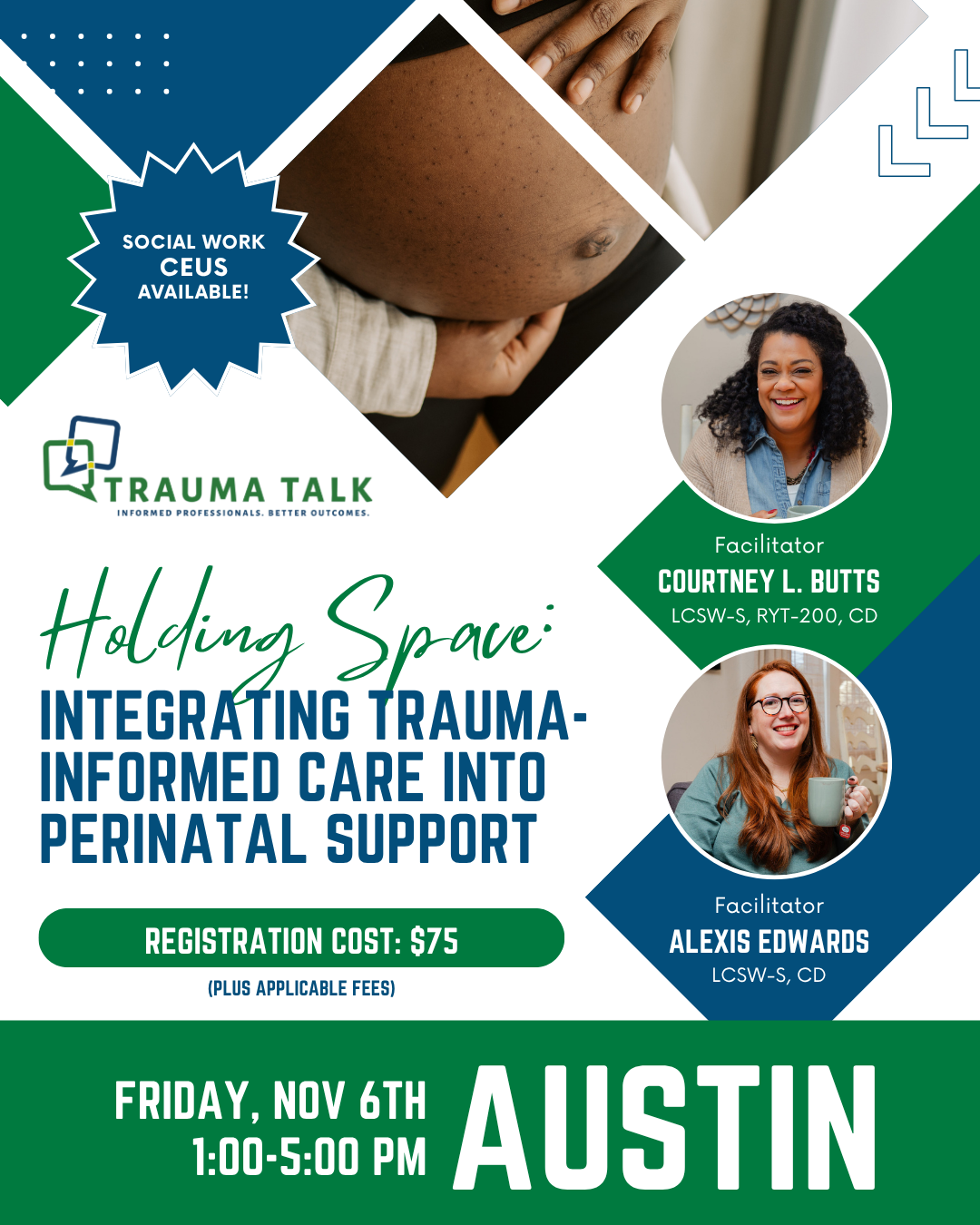
Join us for practical tools to build a trauma informed framework to better support survivor clients throughout pregnancy and postpartum.
Holding Space: Integrating Trauma-Informed Care into Perinatal Support
This session provides perinatal professionals with guidance, practical tools, and a trauma-informed framework to better support survivor clients throughout pregnancy and postpartum. Participants will explore how to create safer, more supportive care experiences for birthing persons impacted by current or past abuse through the principles of consent, connection, and coregulation.
We will examine the many forms of trauma that can affect perinatal mental health, including (but not limited to) intimate partner violence, sexual trauma, race-based trauma, and birth trauma. Participants will gain a foundational understanding of trauma, common trauma responses, and the ways trauma impacts the brain, body, relationships, and overall perinatal experience.
This training also explores how existing systems, policies, procedures, and cultural norms within perinatal care can unintentionally reinforce harm or retraumatization. Through a trauma-informed lens, participants will build skills to recognize these patterns and enhance their ability to provide compassionate, survivor-centered care rooted in safety, trust, collaboration, and empowerment.
Friday, November 6, 2026 • 1 PM - 5 PM (includes optional Mocktail Hour following training!)
Austin Doula Care
8500 Shoal Creek Boulevard
Building 4, #107 Austin, TX 78757
Online Trainings:
We offer two online training opportunities:
Live Virtual Trainings
Self-paced, Comprehensive Online Course
Live Virtual Trainings
We offer real-time virtual trainings on a variety of trauma-informed care topics. These trainings can range from a foundational introduction to trauma-informed care principals (minimum 90 minutes) to more comprehensive deep dives (3+ hours) designed for professionals who already have baseline trauma-informed knowledge and want to expand their skills and understanding.
Common topics include:
Foundations of trauma-informed care
Birth trauma and perinatal mental health
Intimate partner violence and sexual trauma
Race-based trauma and systemic harm
Perinatal loss
Neurodivergence and sensory considerations
Inclusive and gender-affirming care practices
Trauma-informed charting & documentation
Trauma & perinatal substance use
Trauma’s impact on lactation
Grounding tools and regulation strategies
Secondary trauma and self-care
We also offer customized trainings based on your organization’s specific population, challenges, or learning goals.
Upcoming Virtual Trainings:
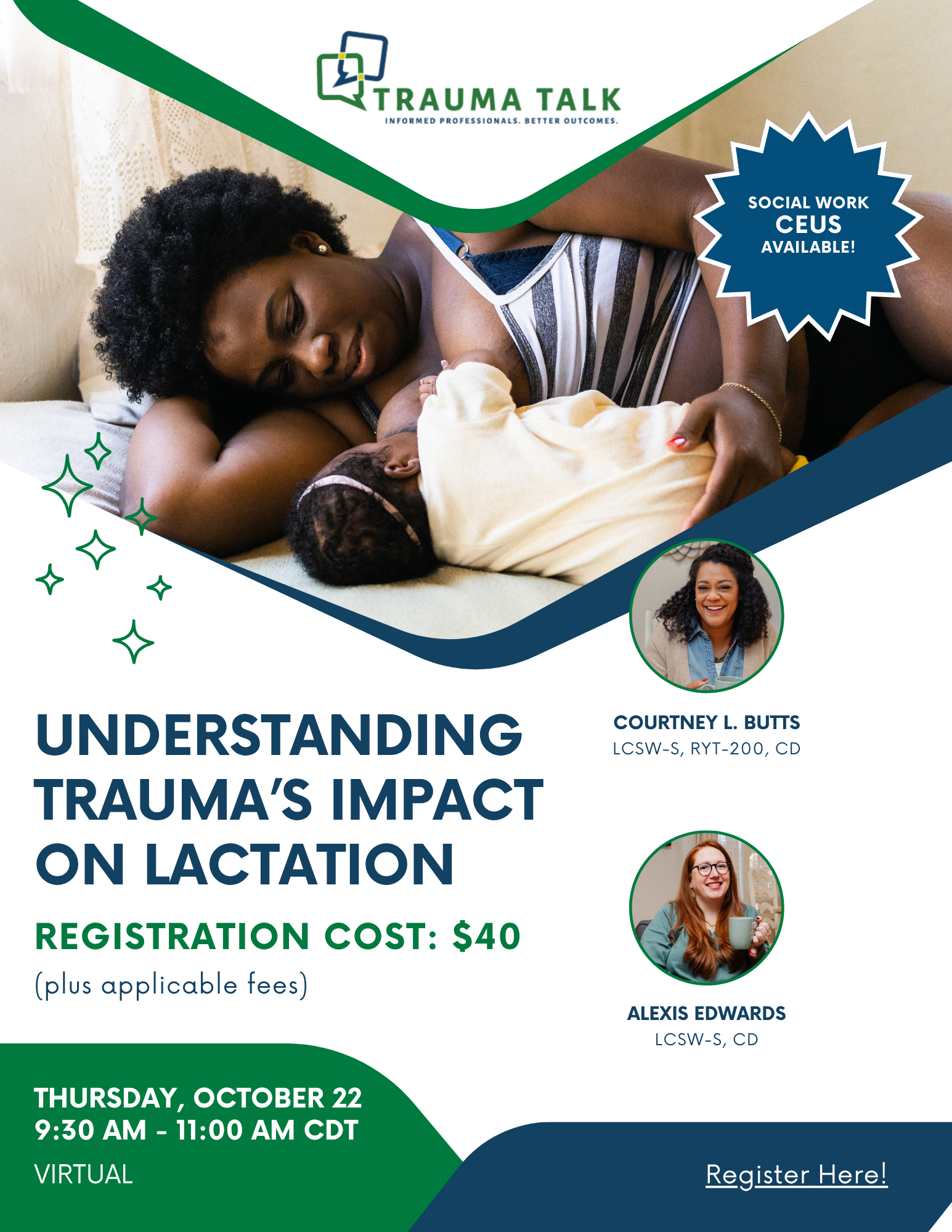
Dive into how past trauma can shape feeding journeys and learn ways to support secure attachment within lactation care.
Understanding Trauma’s Impact on Lactation
This training provides an introduction to trauma-informed care (TIC) within lactation and infant feeding support, exploring why trauma-informed approaches are essential for creating safer, more supportive care experiences for families.
Participants will gain an understanding of the neurobiological impact of trauma on the brain, body, attachment, and lactation experience, while learning to recognize common trauma responses and potential triggers that may arise during feeding, assessment, and clinical interactions.
Together, we will examine the role of autonomy, consent, connection, and coregulation in fostering trust and safety within lactation support. Participants will also explore how to apply trauma-informed principles to communication, assessment, and treatment planning, while gaining practical strategies and interdisciplinary approaches to support dyads impacted by current or past trauma.
Self-paced, comprehensive online course
For professionals looking for flexibility, we also offer a comprehensive self-paced online course that allows participants to learn on their own schedule while still gaining an in-depth understanding of trauma-informed perinatal care.
This option is ideal for individuals, busy professionals, onboarding staff, or organizations wanting accessible ongoing education for their teams.
Course materials can be accessed via Teachable where you can watch pre-recorded modules. This course includes downloadable handouts and a certificate of completion. Upon purchase you have access to the course materials for three months. This course is broken into seven modules:
Module 1: Trauma 101
An introduction to trauma, including the need and meaning of trauma-informed care, trauma symptoms, and the types of trauma that can surface or manifest in the perinatal period. An overview of theories and frameworks that provide a better understanding around the ways in which trauma impacts the brain and body, and consideration around the ways in which standards of practice, procedures and cultural norms have created an ethos of tolerance and increased harm for birthing people.
Module 2: Intimate Partner Violence and Sexual Assault
A deep dive into intimate partner violence and sexual assault and the impact these experiences can have on birthing person and baby. Explores the types of abuse, the ways in which a power imbalance can impact relationships, barriers survivors might face in pregnancy, as well as the dangers that exist when ending an abusive relationship. This module also identifies multicultural considerations, and the unique impact marginalized groups might face.
Module 3: Race-Based Trauma
A focused conversation around racial disparities in birth and postpartum and the ways in which systemic racism and chronic stress can impact birthing person and baby. Explores the historical context around the use and abuse of black bodies, including slavery, medical experimentation and forced sterilization and reviews the ways in which implicit bias and the current social climate have contributed to negative outcomes for black birthing people. Provides action steps for birth and postpartum professionals to consider in order to improve relationships and change outcomes.
Module 4: Perinatal Care in the LBGTQIA+ Community
Explores the heteronormative + cisnormative components of the perinatal period and defines key language and terms within the LGBTQIA+ community. Explores barriers to healthcare and ways to integrate inclusive and gender affirming language and best practices.
Module 5: Trauma Echos in Birth & PP
A deeper dive into the ways trauma can impact birth and postpartum. Explores triggers and the hierarchy of defense the body utilizes for safety, including the consequences of the stress response and the ways attachment and trust can be disrupted. Defines informed consent and explores assessment considerations, including ways to improve the intake process for survivors.
Module 6: Supportive Responses and Grounding
Offers tangible solutions and techniques to improve response and connection when disclosure with clients occurs. Explains empathy, active listening, and safety planning, and explores grounding techniques and evidence-based treatments that can increase positive outcomes for survivors navigating birth and postpartum.
Module 7: Secondary Trauma & Self-Care
Identifies the ways vicarious trauma, compassion fatigue and burnout can surface for perinatal professionals and how self-compassion and incremental self-care can prevent harmful praticies and improve systems and culture related to perinatal health and wellness.
This course is 100% online, self-paced, and upon purchase you have access to the course materials for three months.
FAQs
Who is this training for?
Anyone that works with the perinatal population! Whether you work with families considering parenthood, preparing to birth, or already navigating postpartum, our trainings can absolutely benefit your practice lens! Our hope is that all professions want to prioritize trauma-informed care and we are always thrilled when we see multiple disciplines – doctors, nurses, midwives, doulas, lactation consultants, and more put in the effort to improve outcomes!
What is the difference between live virtual trainings and the online course?
The real time training means you get to see our faces live and off-the-cuff! The online course is a series of pre-recorded modules that you get to absorb at you own pace. Our live trainings are scheduled for a specific day and time, and you join us via Zoom to learn and engage.
How long do I have access to the comprehensive online course?
Upon purchase, you have access to the course materials for three months.
Do you offer private trainings or personalized lectures?
Yes! We have taught for hospitals, midwife associations, birthing coalitions, at universities and international conferences! If you are a group or organization that works with the perinatal population then we can serve your needs! Reach out to schedule something specific.
Do you offer refunds?
Due to the time, sweat and magic put into our materials, we do not offer refunds.
Do you offer payment plans or scholarships?
We want our content to be accessible and have options available based on need. Please contact us for further information.
We didn’t answer your question?
Email us at TraumaTalk.Us@gmail.com

Join the Trauma Talk Community
Subscribe to our newsletter to stay up to date with our latest trainings and resources.